Consumer Education

The Pesticide Library

An educational installation by DeHaat Honest Farms — helping consumers understand pesticide regulations, testing standards, and what goes into keeping food safe.

230
Tests Per Batch
49
Banned in India
16
Restricted Use
The Pesticide Library

What Is The Pesticide Library

An apothecary-style installation where glass jars represent the pesticides regulated under Indian law — each labelled with its name, classification, and the regulatory framework around it. A consumer awareness initiative by DeHaat Honest Farms.

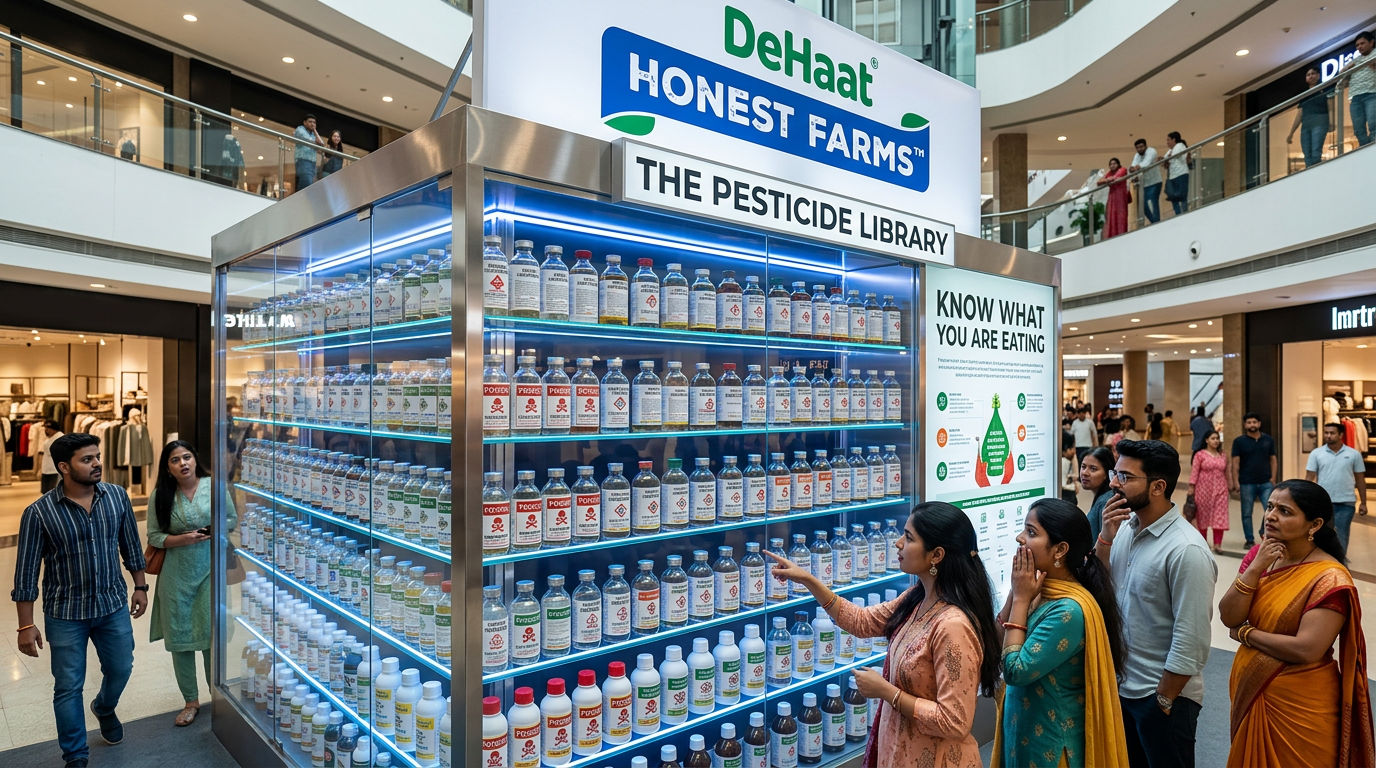
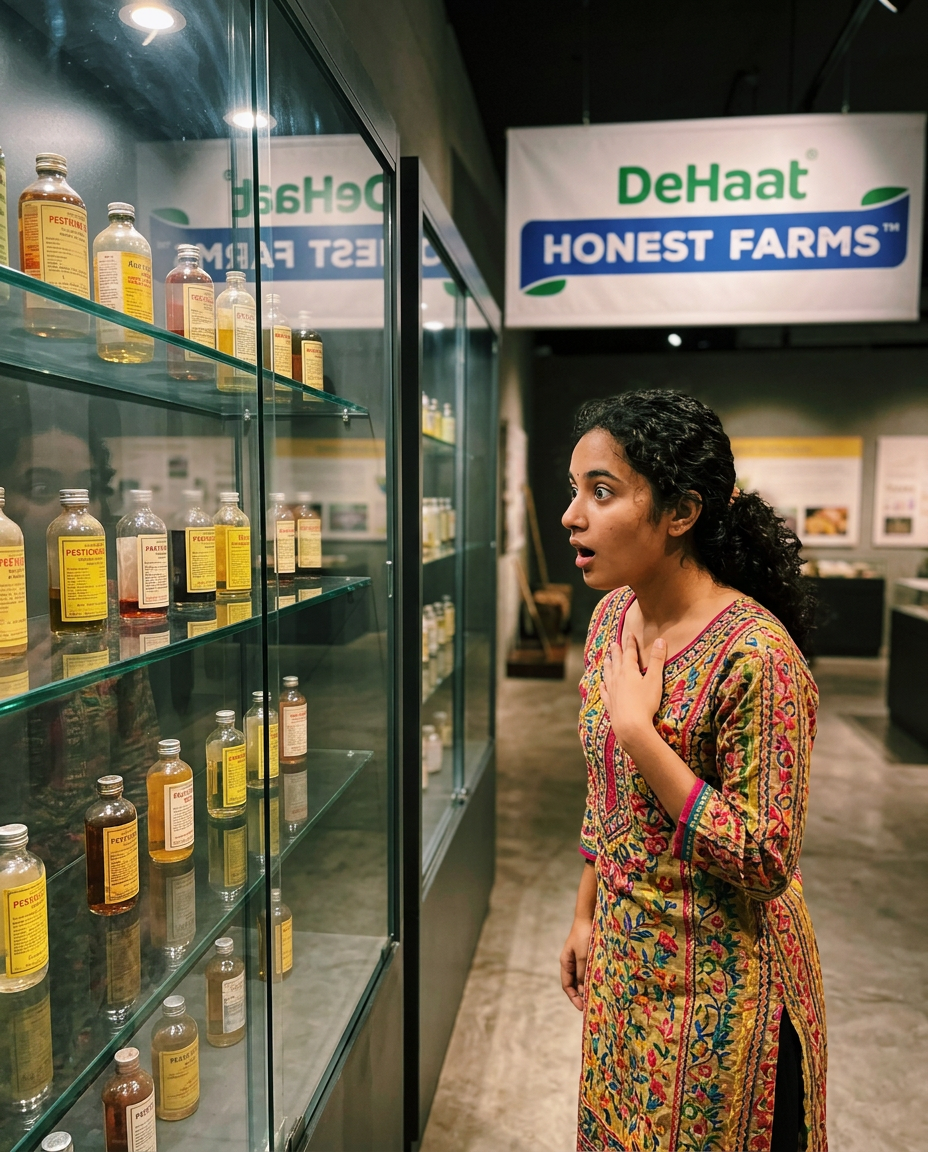
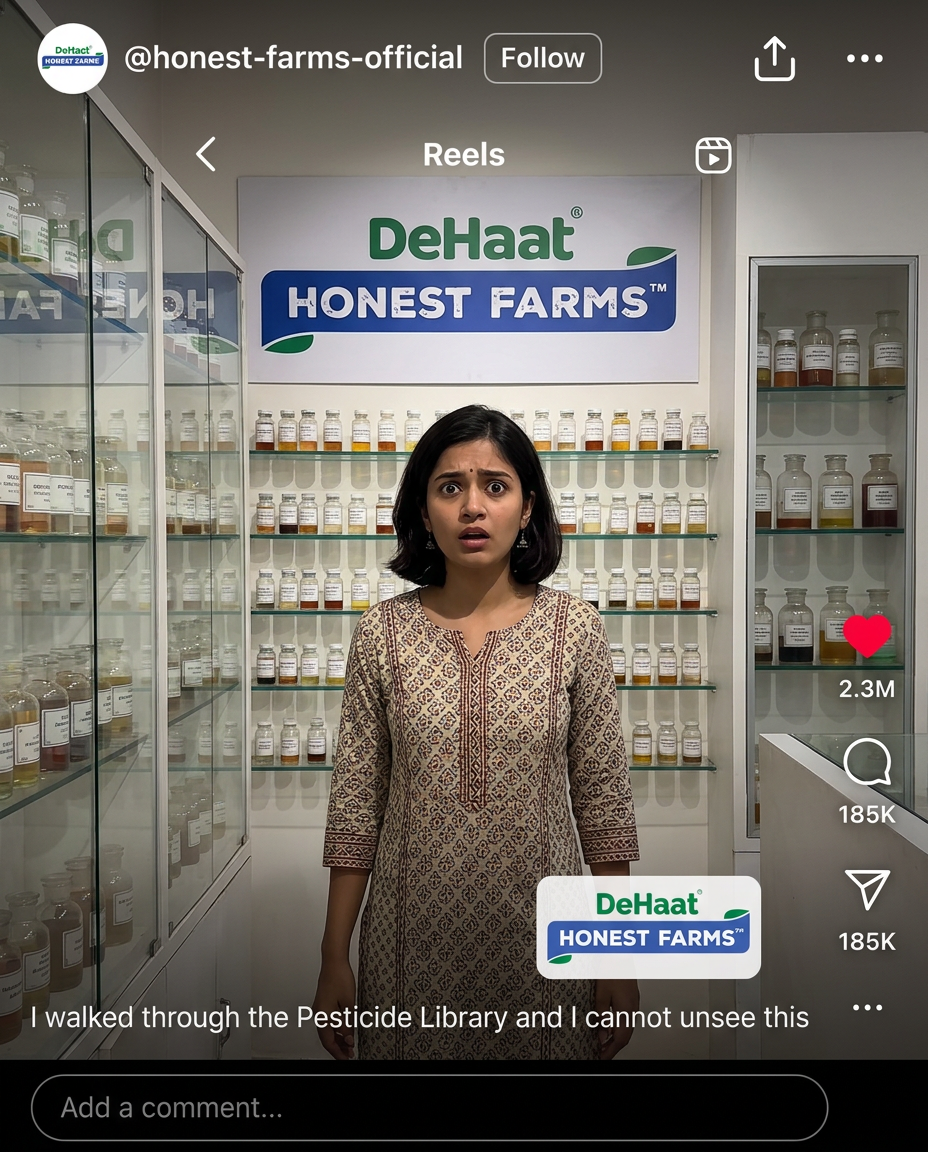
Visitors at the Pesticide Library

A Walk-Through Consumer Experience

The Pesticide Library is a physical, walk-through installation designed for high-footfall consumer venues — malls, expos, food festivals, and retail floors. Visitors enter an apothecary-style space lined with glass jars, each representing a pesticide regulated under Indian law.

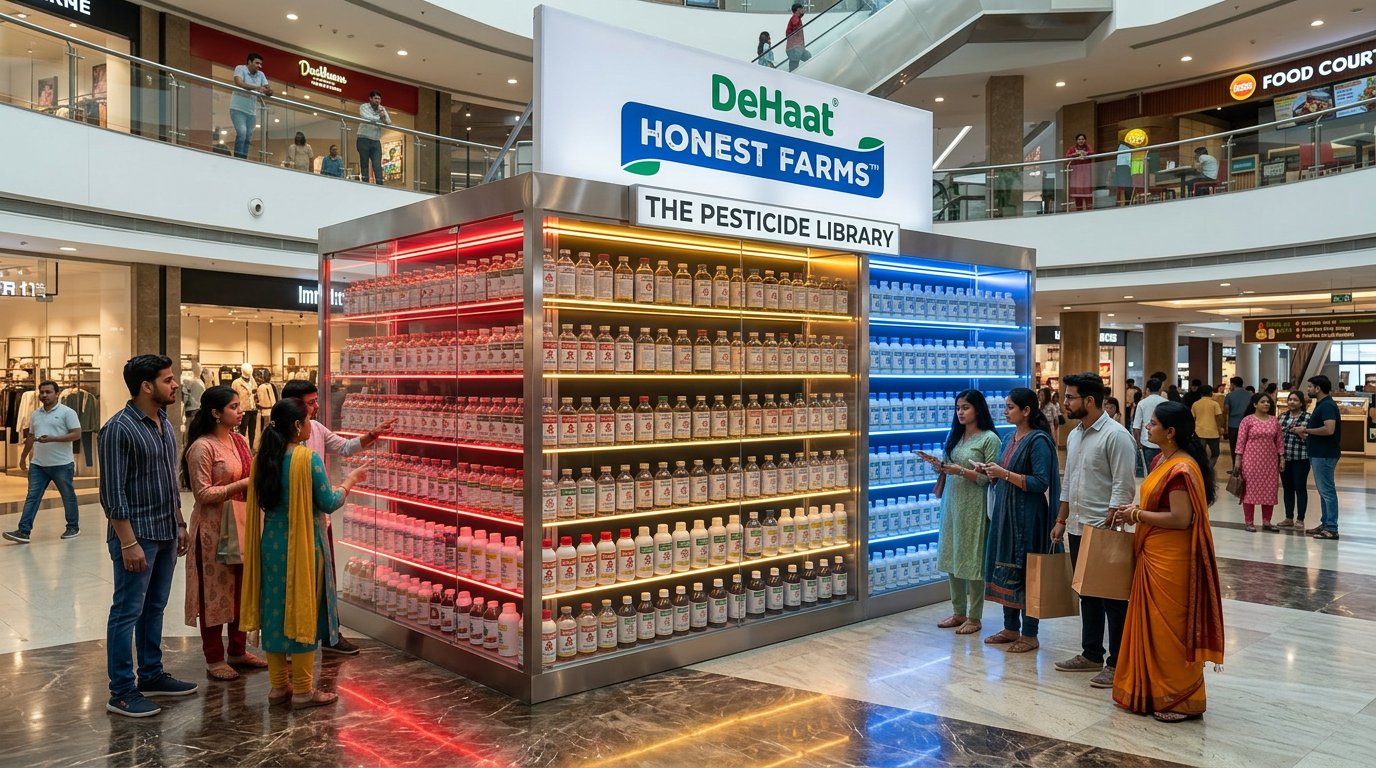
The installation is divided into three colour-coded zones, mirroring India's regulatory framework: Banned (red), Restricted (amber), and MRL-Compliant (blue). Visitors walk through each zone sequentially, guided by signage, shelf labels, and on-ground staff.

At DeHaat Honest Farms, we run 230 tests per batch covering pesticide residues, heavy metals, and microbiological safety — so consumers can see exactly what goes into keeping their food safe.

How The Installation Works

A guided walk-through experience across three zones — each representing a category of pesticide regulation in India.

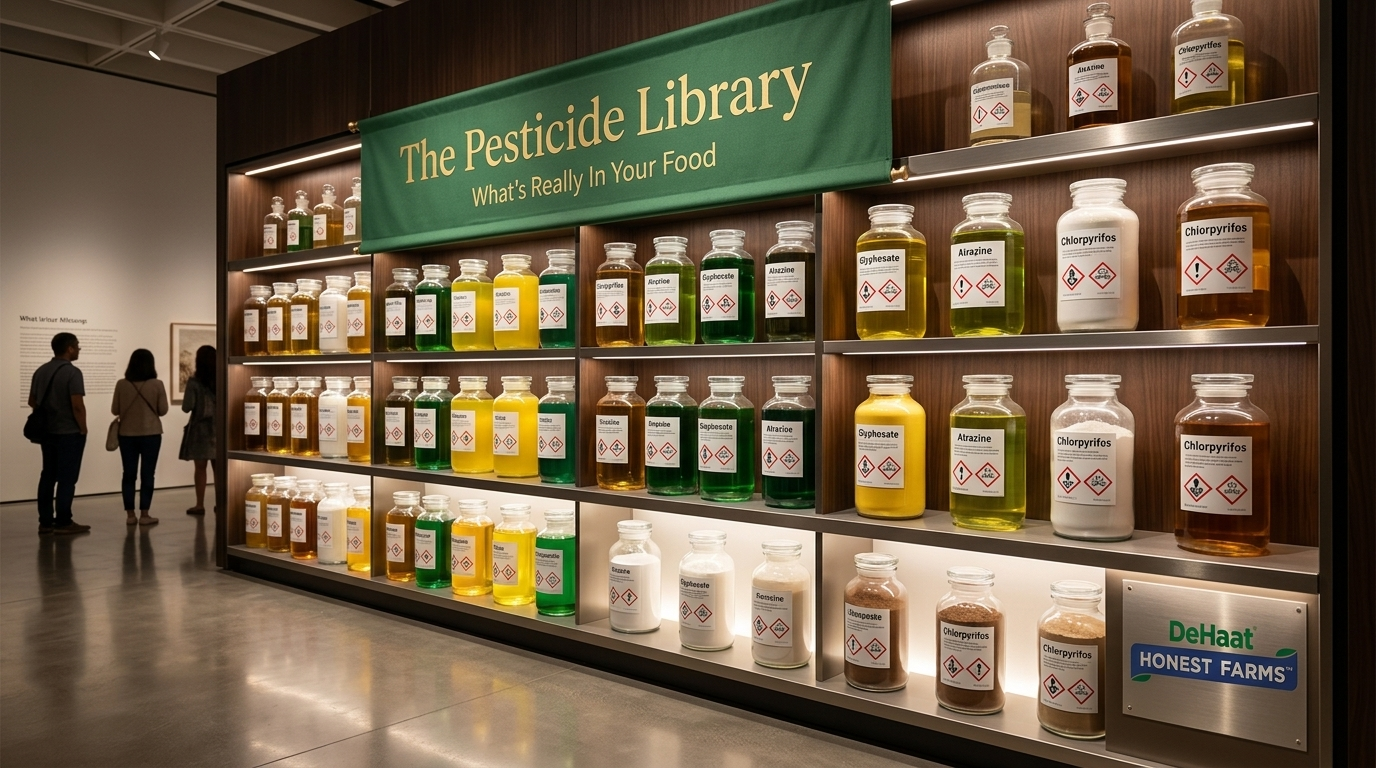
Full Pesticide Library installation showing all three colour-coded zones
Full Installation Overview. Three colour-coded zones — red (banned), amber (restricted), blue (MRL-compliant) — arranged as a sequential walk-through inside a retail venue.
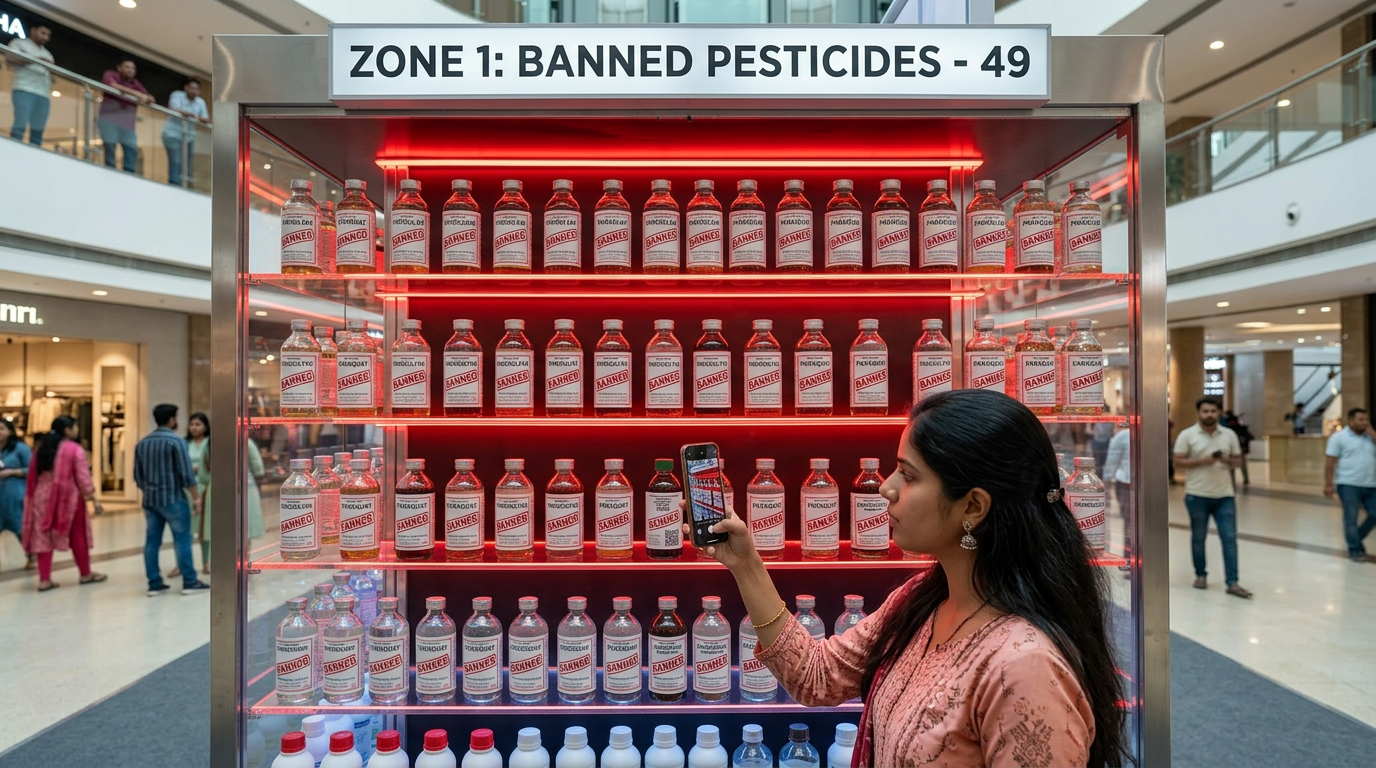
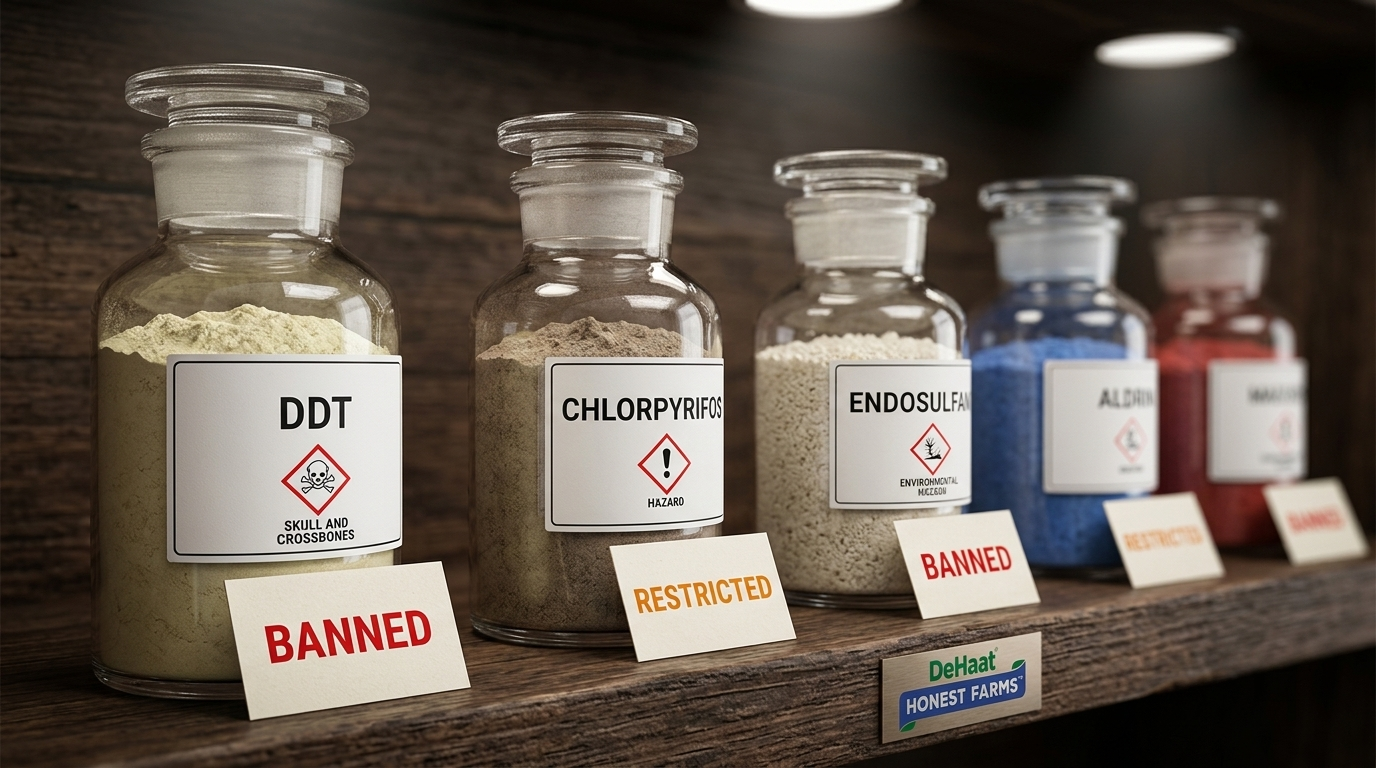
Red zone — banned pesticides shelving
Zone 1

Banned Pesticides

The first section visitors encounter. Glass jars with red labels represent the 49 pesticides completely banned in India. Each jar is sealed and carries a label showing the pesticide name, chemical class (organochlorine, organophosphate, etc.), year of ban, and the CIB&RC order reference.

What's Inside Each Jar

Jars contain a colour-coded inert powder or granule (non-toxic) as a visual stand-in — not actual pesticides. The label does the educating. Each label includes a QR code linking to the relevant government gazette notification for that pesticide's ban.

Shelf Design

Back-lit apothecary shelving with red-tinted LED strips. Jars are arranged alphabetically. A header board reads: "49 Pesticides Banned in India" with the CIB&RC seal.

Zone 2

Restricted Use

The second zone features amber-labelled jars for the 16 pesticides that are restricted — permitted only under specific conditions, for certain crops, or by government-approved operators.

What's Inside Each Jar

Same inert-powder format as Zone 1. Labels show the pesticide name, the specific restriction (e.g., "Public health use only" for DDT, "Restricted crops only" for Monocrotophos), and the permissible use conditions under CIB&RC guidelines.

Shelf Design

Amber-tinted LED shelving. A conditions board beside each jar explains why this pesticide is restricted rather than banned — giving visitors context on how regulation works in gradations, not just absolutes.

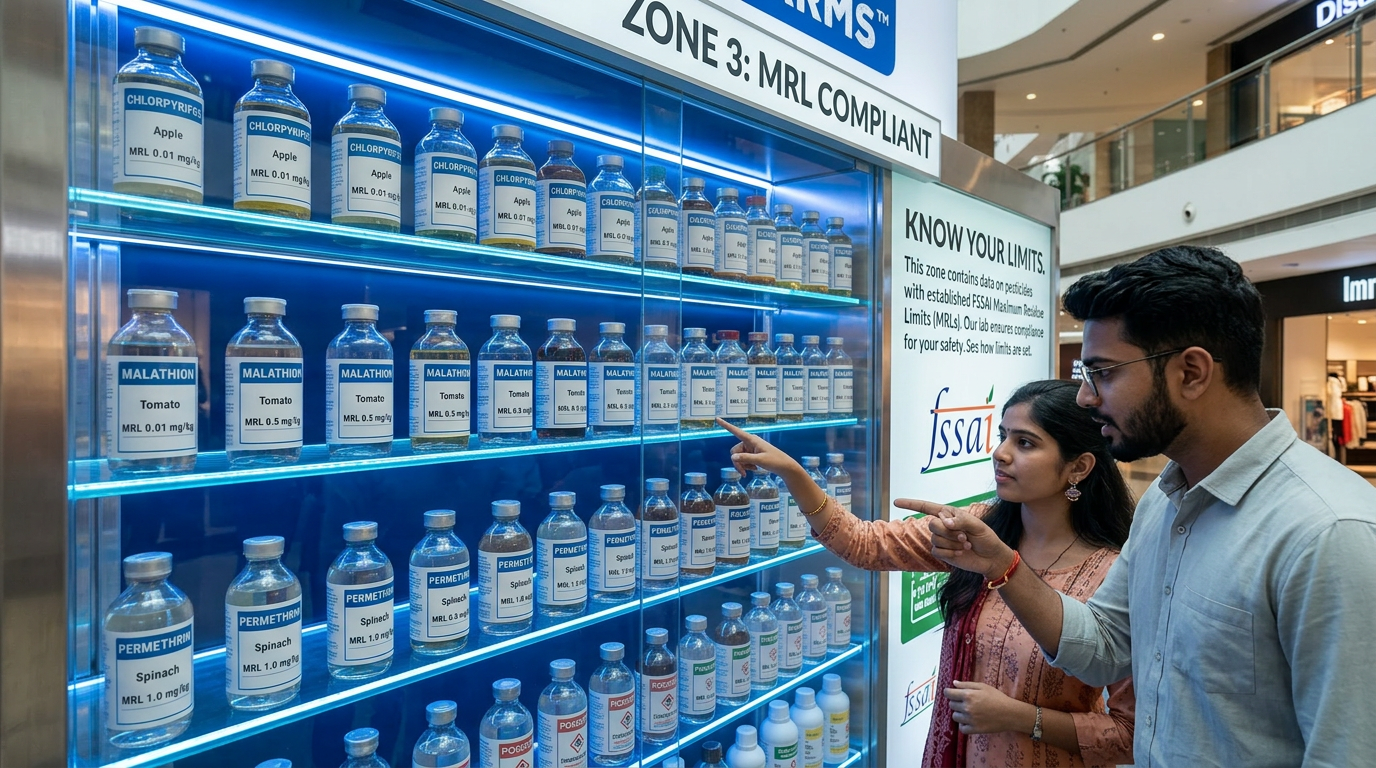
Blue zone — MRL-compliant pesticides shelving
Zone 3

MRL-Compliant

The third and final zone features blue-labelled jars representing pesticides that are permitted within Maximum Residue Limits (MRL) — the highest legally allowable concentration of a pesticide residue in food, set by FSSAI.

What's Inside Each Jar

Labels show the pesticide name, the commodity it's tested against (e.g., rice, wheat, tea), the MRL value in mg/kg, and the FSSAI regulation reference. A colour scale on the label visualises how close common residue levels come to the legal limit.

Shelf Design

Blue-tinted LED shelving. A "Know Your Limits" info panel shows how FSSAI sets MRLs through field trial data and risk assessment — the default tolerance being 0.01 mg/kg for most commodities.

Physical Setup

Modular shelving units (6ft × 3ft each) that can be assembled in 2–3 hours. The installation fits a 200–400 sq ft footprint. All components are flat-packed and transportable for multi-venue deployment.

👤

On-Ground Staff

2–3 trained Honest Farms representatives per shift. They guide visitors through each zone, answer questions about pesticide regulation, and share how the 230-test process works at Honest Farms.

📱

QR-Enabled Jars

Every jar carries a QR code. Scanning opens a mobile page with the full regulatory detail for that pesticide — gazette notification, chemical class, health impact summary, and relevant FSSAI or CIB&RC references.

🏠

Venue Flexibility

Designed for malls, food expos, farmers' markets, retail floors, and college campuses. The modular format adapts from a single-aisle walkthrough to a full corner-booth experience depending on available space.

How India Regulates Pesticides

India has one of the most comprehensive pesticide regulatory frameworks in the world, managed by CIB&RC under the Insecticides Act, 1968, and FSSAI under the Food Safety & Standards Act.

49

Banned Pesticides

Pesticides completely prohibited for manufacture, import, and use in India under CIB&RC orders. These include organochlorines, organophosphates, and mercury-based compounds phased out over decades of regulatory action.

Including Endosulfan, Aldrin, Chlordane, Dichlorvos, Methyl Parathion, Heptachlor, Lindane, Dieldrin, Aldicarb, Methomyl, Dicofol...

Full list — Wikipedia →
MRL

Maximum Residue Limits

FSSAI sets MRLs — the highest legally permissible concentration of a pesticide in food (mg/kg). These are determined through field trial data and risk assessment for specific pesticide-commodity combinations.

Default tolerance: 0.01 mg/kg. Herbs & spices: 0.1 mg/kg (revised April 2024). Commodity-specific limits vary.

FSSAI MRL Regulations →
16

Restricted Use

Pesticides permitted under specific conditions — limited to certain crops, certain formulations, or use by government-approved operators only. These carry additional regulatory safeguards.

DDT (public health only), Monocrotophos (restricted crops), Aluminium Phosphide (approved operators), Chlorpyrifos (restricted crops)...

National Portal →